【MBA】2026年度2学期「Uncertainty and Management in Organizations」最終講義を終えて
2026年11月13日
【MBA】2026年度2学期「Uncertainty and Management in Organizations」最終講義を終えて
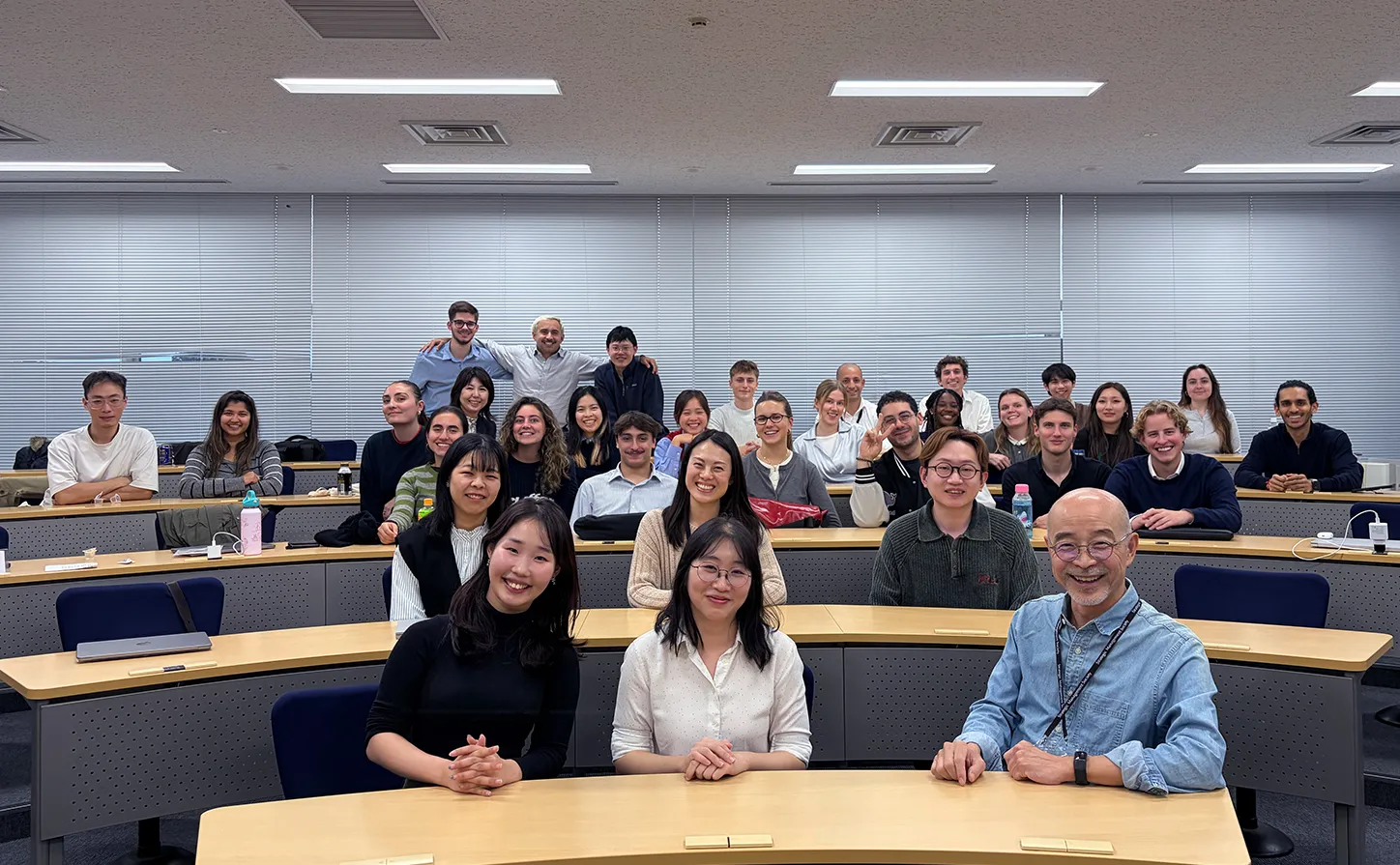
2026年11月5日、清水勝彦教授による英語科目「Uncertainty and Management in Organizations」の最終講義が行われました。本科目は9月から11月にかけて毎週木曜日に開講され、不確実な環境の中で、組織やリーダーがどのように状況を見極め、意思決定を行うべきかを、ケースディスカッションを通じて学ぶ授業です。
この授業には多くの交換留学生が参加しており、講義はすべて英語で行われました。毎回、国籍やバックグラウンドの異なる学生たちが活発に意見を交わし、それぞれの視点から不確実性への向き合い方を議論しました。
授業で学んだこと
実際に起きた登山事故や宇宙開発の事故を扱ったケースでは、いつもと違う兆候が見過ごされ、一度決めた計画をやめられなくなっていく過程(escalation of commitment)について議論しました。
金融危機を描いた映画を題材にした回では、「本当の不確実性」と「確かだと思い込んでいること(false sense of certainty)」の違いを考えました。多数派や専門家の意見であっても前提を疑い、現場や元のデータを自分の目で確かめることが、思い込みから抜け出す第一歩になると学びました。
また、飲食店の海外展開を扱ったケースを通して、不確実性は日々のビジネスの中にもあることを実感しました。完璧な計画がなくても、まず動いてみて、そこから学び、修正していく姿勢の大切さにも気づかされました。
授業で繰り返し紹介された「Planning is everything, but plans are nothing.」という言葉も、多くの学生の心に残りました。計画は未来を正しく当てるためのものではなく、前提を確かめ、状況に応じて見直すためのものです。そして不確実性は、避けるだけのものではなく、チャンスにもなり得ます。
授業期間中には、国際的企業で人事や組織づくりに携わってこられたゲストを講師にお迎えし、不確実な中で人や組織を動かすことについてお話を伺いました。エネルギーあふれるお話に学生たちは大いに刺激を受け、質疑応答でも次々と質問が寄せられました。講演の後、学生たちは「正しい答えを出すだけでは、組織は変わらない。周りの人を巻き込むことも仕事のうち」「うまくいったことも振り返り、次に生かす」「失敗も含めて、経験そのものに価値がある」「キャリアは計画どおりに進まなくていい。自分の強みを知り、選んだ道を正解にしていく」といった学びを言葉にしていました。
最終講義:グループプレゼンテーション
グループ課題では、各チームが日本の上場企業を1社選び、不確実性の中での意思決定の場面を描くケースとティーチングノートを執筆しました。最終講義では各チームが発表を行い、発表のたびに会場から多くの質問が寄せられました。教室は終始にぎやかで、学生たちも楽しみながら議論を深めていました。
学生たちの声:この授業で得たもの
授業の最後には、「ケースそのものだけでなく、仲間がそれをどう読んだかからも多くを学んだ」「国籍や文化の違う仲間の意見を聞く機会が多く、視野が広がった」「最初は不確実性が苦手だったが、今は向き合う準備ができた」「不確実性がなくなったわけではないけれど、受け入れられるようになった」といった声が寄せられ、清水先生と仲間への感謝の言葉で締めくくられました。
おわりに
約2か月という短い期間でしたが、答えのない問いに向き合い、多様な仲間と議論を重ねたことは、大変貴重な経験となりました。
M49 牧田みほり
[MBA] Final Class of "Uncertainty and Management in Organizations" (Fall 2026)
On November 5, 2026, the final class of "Uncertainty and Management in Organizations," an English-taught course by Professor Katsuhiko Shimizu, was held. The course ran every Thursday from September to November. Through case discussions, students learned how organizations and leaders can read a situation and make decisions in an uncertain environment.
Many international students took this course, and all classes were held in English. In every class, students from different countries and backgrounds actively shared their opinions and discussed how to face uncertainty from their own perspectives.
What We Learned
In cases about real accidents in mountain climbing and space exploration, we discussed how unusual signs were overlooked and how people found it hard to stop a plan once they had committed to it (escalation of commitment). From these cases, we learned the importance of deciding in advance when to stop, and of creating a place where anyone, regardless of position, can raise concerns or disagree.
In a session based on a film about the financial crisis, we thought about the difference between real uncertainty and a "false sense of certainty." We learned that questioning assumptions, even those held by the majority or by experts, and checking the field and the original data with our own eyes is the first step out of false certainty.
Cases about a restaurant chain expanding overseas and the launch of a new restaurant showed us that uncertainty exists not only in special accidents but also in everyday business. We also realized the value of acting first, learning from the results, and adjusting along the way, even without a perfect plan.
The phrase "Planning is everything, but plans are nothing," which came up again and again in class, stayed with many students. A plan is not a tool for predicting the future correctly, but a tool for checking our assumptions and revising them as the situation changes. And uncertainty is not only something to avoid; it can also be an opportunity.
During the course, we welcomed a guest speaker with experience in HR and organizational development, who spoke about moving people and organizations under uncertainty. The energetic talk greatly inspired the students, and many questions followed in the Q&A. Afterwards, students put their learnings into words: "Finding the right answer is not enough to change an organization; bringing people along is part of the work," "Look back on what went well, too, and use it next time," "Experience has value, including failure," and "Your career does not have to go as planned. Know your strengths and make the path you chose the right one."
Final Class: Group Presentations
For the group assignment, each team chose one listed Japanese company and wrote a case and a teaching note describing a decision made under uncertainty. In the final class, each team presented its case, and many questions came from the audience after every presentation. The classroom was lively throughout, and students enjoyed deepening the discussion together.
What Students Took Away from the Course
At the end of the course, students shared their thoughts: "I learned a lot not only from the cases themselves, but also from how my classmates read them," "Hearing from classmates of different nationalities and cultures broadened my view," "At first I was uncomfortable with uncertainty, but now I feel ready to face it," and "Uncertainty has not disappeared, but I have learned to accept it." Many closed with words of thanks to Professor Shimizu and their classmates.
Closing
Although the course lasted only about two months, facing questions with no single answer and discussing them with such diverse classmates was a truly valuable experience.
M49 Mihori Makita
