2026年08月27日
【EMBA】2026年春学期 グローバル経営(トリブバン大学 ドゥルバ・クマール・ゴータム教授)の講義が行われました
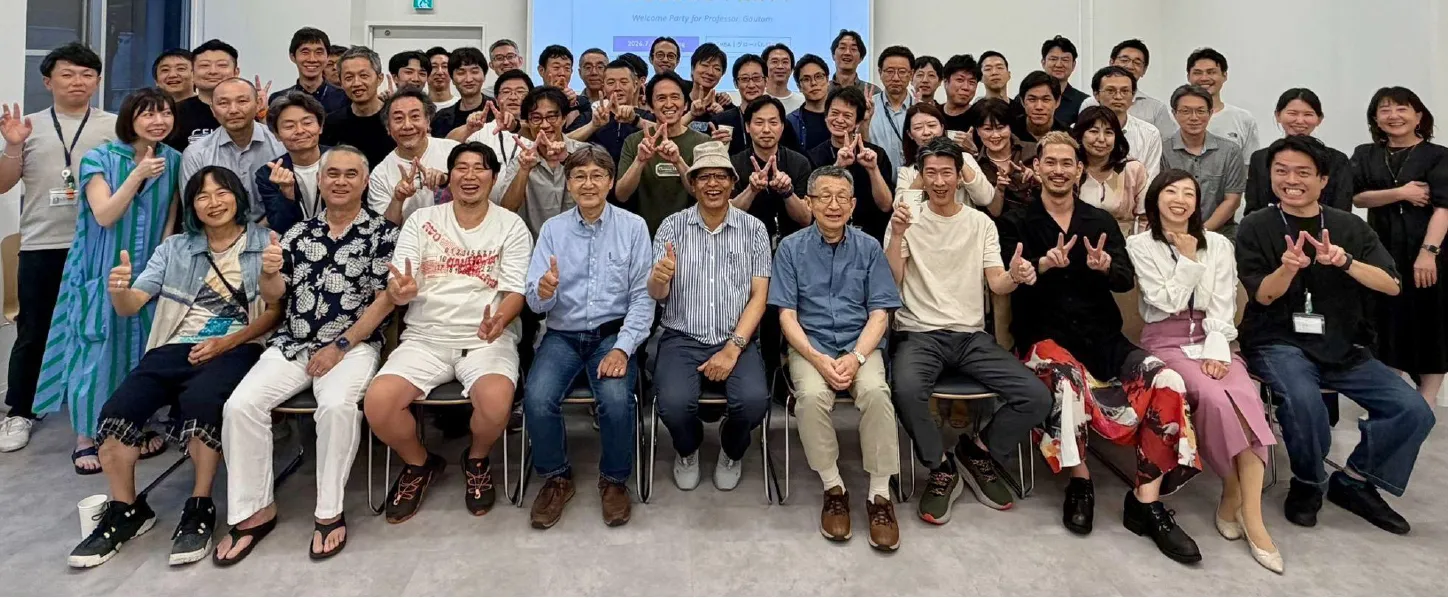
2026年7月17日(金)から19日(日)の3日間、EMBAカリキュラムの一科目としてトリブバン大学のドゥルバ・クマール・ゴータム教授による「グローバル経営」の講義が行われました。グローバル市場における経営戦略と異文化理解の本質について、白熱した議論が交わされました。
この科目は、KBSが参画するビジネススクールの教育連携機構「EMBAコンソーシアム」に加盟する大学や、「海外フィールド」科目を通じて交流のある大学から講師を招き、ケース討論と講義を英語で行う集中講義です。国外の知識を伝授されることとは一線を画し、講師との討論を通じて自らの価値観を相対化し、新たな視座を見出すことを狙いとしています。
講義全体を通じてゴータム教授が一貫して訴えたのは、「表面的な数字やスローガン(イノベーション、分析ツール、固定化された文化論)にとらわれず、現場の文脈と深層にある本質を読み解け」という実務家への強力なメッセージでした。
講義序盤、製品ライフサイクルを議論した際、「iPhoneはなぜ圧倒的なポジションを維持し続けているのか」が問われました。学生から「継続的なイノベーションこそが成功のカギではないか」という声が上がると、ゴータム教授は間髪をいれずに「No!」と答え、こう続けました。
「新しい要求は、抽象的な議論からは生まれない。必要なのは、リサーチ、リサーチ、そしてリサーチだ」。
イノベーションという言葉を安易に用いることへの強い警鐘でした。イノベーションは結果に過ぎず、むしろ本質は「顧客や消費者の新しい要求や潜在的なニーズ」を正確に特定することにあります。現場に足を運び、地道な調査を通じて既存製品の限界や顧客の不満を見つけ出す積み重ねの先にしか、製品やサービスの新たな地平は見いだせません。華々しいキーワードに逃げず、現場の事実に向き合う姿勢こそがイノベーションの絶対条件であると、私たちは強く肝に銘じました。
クラスの緊張感が最高潮に達したのは、ルーマニアの家具メーカーが日本市場に進出すべきかを討議するケーススタディでした。
事前のグループワークでは、学生チームの大半が日本の消費者の特殊性、物流コストの壁、強力な競合の存在などを理由に「進出すべきではない」という結論に至りました。しかし、その報告を聞いたゴータム教授はこう諭します。「"Do Not"という言葉で安易に思考を止めてはならない」。
黒板の前に立った教授は、「家具の顧客とは誰か」と私たちに問いかけました。一般家庭という市場だけでなく、学校、政府機関、オフィスなどへ顧客セグメントを広げ、相互の波及効果を狙う多角的なアプローチを提示した上で、こう語りかけました。「リスクがあるからと扉を閉ざすのではなく、どうやってその扉を開けるかを考えるのが経営者の役割だ。すべての扉は開かれている」。失敗を恐れて悲観論に逃げがちな視点を捨て、論理的にあらゆる可能性を探る経営者としての覚悟を突きつけられた瞬間でした。
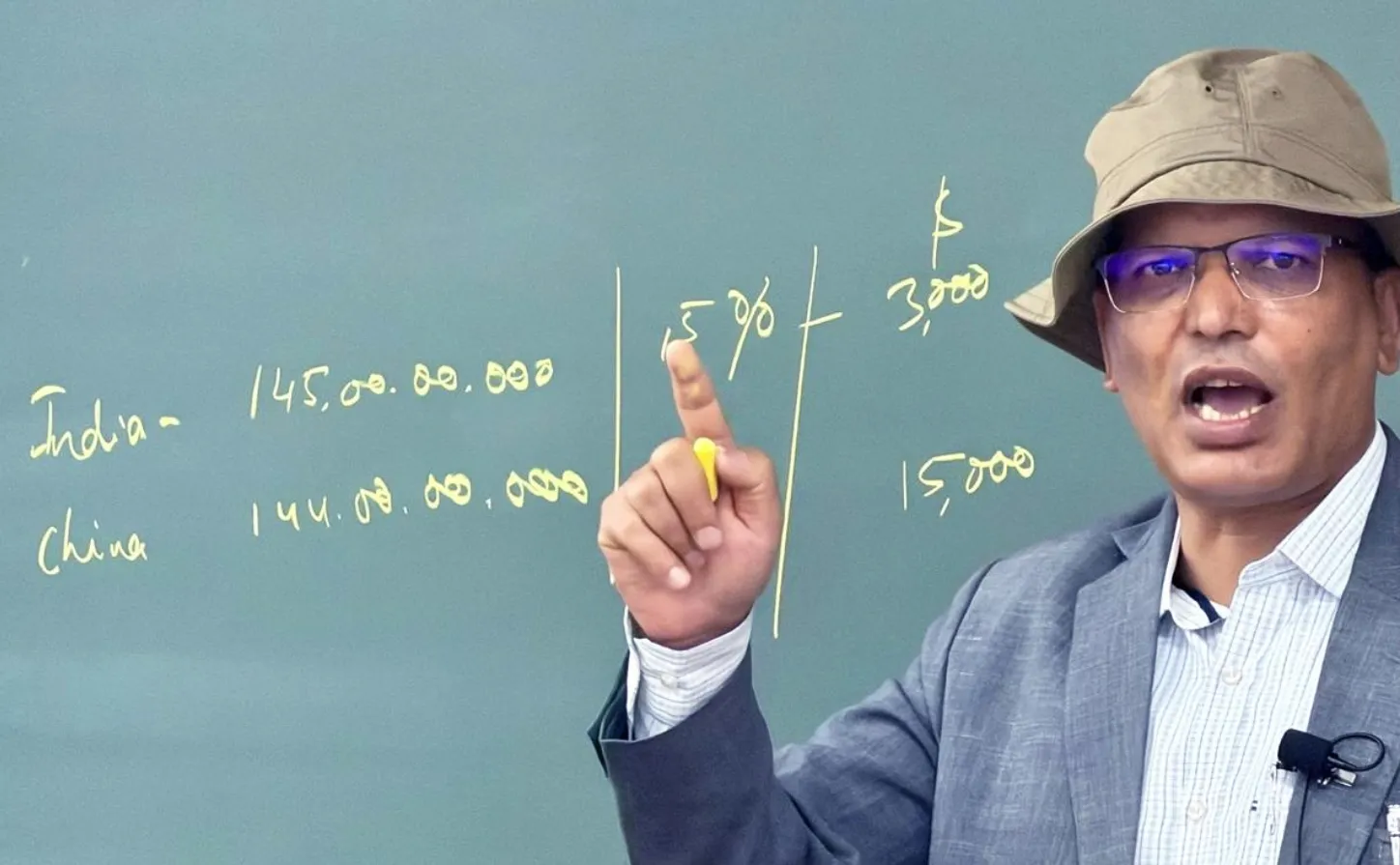
最終講義では、グローバルな文化理解における従来の「タマネギのメタファー(静的・二極化モデル)」の限界を指摘した上で、現代においては「海のメタファー(Ocean Metaphor)」こそが求められているのではないかと提起しました。文化とは、表面で風によって形を変える波の下に、潮の満ち引きや深層を流れる巨大な海流が存在する海のようなものであり、「激しく変化する表面の波の中に、緩やかに全体を動かす潮流がある」という考えです。
ゴータム教授の言葉は、日々変化する市場環境をフレームワークだけで読み解こうとする私たちに、新たな視座をもたらしてくれました。底流に流れる普遍的なニーズを見定め、変化を丸ごと受け止めるしなやかさ。荒波を進む真のグローバルリーダーに必要なことを学んだ3日間でした。
E12 広報委員 石川智規
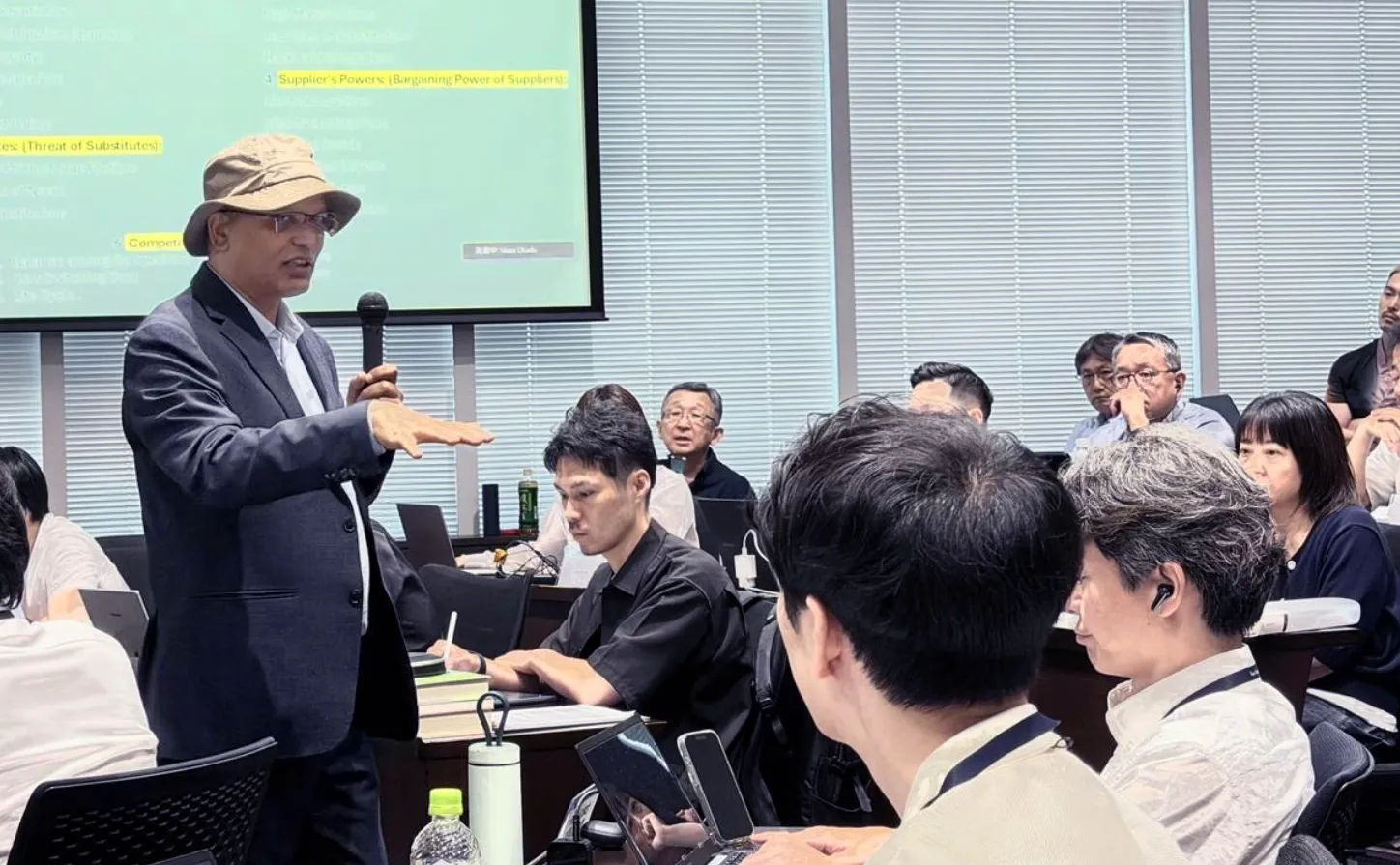
[EMBA] Spring 2026 "Global Management Seminar" Held with Prof. Dhruba Kumar Gautam, Tribhuvan University
Over the three days from Friday, July 17 to Sunday, July 19, 2026, the "Global Management" course, part of the EMBA curriculum, was conducted by Professor Dhruba Kumar Gautam from Tribhuvan University. Heated and engaging discussions took place regarding the essence of management strategies and cross-cultural understanding in the global market.
This intensive course, conducted entirely in English, features guest lecturers invited from universities in the "EMBA Consortium"--an educational partnership of business schools that KBS participates in--as well as universities affiliated through our "Overseas Field" courses. Rather than simply imparting knowledge from abroad, the course aims to help students gain an objective perspective on their own values and discover new viewpoints through rigorous debate with the instructor.
Throughout the course, Prof. Gautam consistently delivered a powerful message to us as practitioners: "Do not be trapped by superficial numbers or slogans--such as 'innovation,' analytical tools, or fixed cultural theories--but rather, decipher the local context and the underlying essence."
Early in the course, during a discussion on the product life cycle, the question was raised: "Why has the iPhone maintained such an overwhelming position?" When a student suggested, "Isn't continuous innovation the key to success?", Prof. Gautam immediately replied, "No!" and continued:
"New demands do not emerge from abstract discussions. What is necessary is doing research, research, and research."
This was a strong warning against the casual use of the word "innovation". Innovation is merely a result; its true essence lies in accurately identifying the "new demands and latent needs of customers and consumers." It is only through the accumulation of steady, on-the-ground research--uncovering the limitations of existing products and customer dissatisfaction--that a new horizon for products and services can be found. We etched it into our minds that facing the facts on the ground, rather than hiding behind glamorous buzzwords, is the absolute prerequisite for innovation.
The tension in the classroom reached its peak during a case study discussing whether a Romanian furniture manufacturer should enter the Japanese market. In prior discussions, the majority of the student teams presented the conclusion that the company "should not enter," citing reasons such as the uniqueness of Japanese consumers, the barrier of logistics costs, and the presence of powerful competitors. However, upon hearing these reports, Prof. Gautam admonished us: "Don't use 'Do Not'. Do not easily stop your thinking."
Standing in front of the blackboard, the professor asked us, "Who are the furniture customers?" He broadened the customer segments beyond the general household market to include schools, government agencies, and corporate offices, presenting a multifaceted approach aimed at creating reciprocal synergy. He then told us: "The role of a business leader is not to close the door because there are risks, but to figure out how to open that door. Every door is open." It was a moment that thrust upon us the resolve required of a business leader: to abandon the tendency to escape into pessimism out of fear of failure, and instead logically explore every possibility.
In the final lecture, after pointing out the limitations of the traditional "Onion Metaphor" (a static, bipolar model) in global cultural understanding, he proposed that an "Ocean Metaphor" is precisely what is needed in the modern era. The idea is that culture is like an ocean: beneath the surface waves that change shape with the wind, there are tides and massive ocean currents flowing in the depths. As he put it, "Amidst the violently changing waves on the surface, there is an underlying current that gently moves the whole."
Prof. Gautam's words brought a new perspective to those of us who tend to interpret the ever-changing market environment solely through frameworks. The ability to discern the universal needs flowing in the undercurrent and the resilience to embrace change in its entirety--these three days taught us exactly what it takes to be a true global leader navigating rough seas.
Tomonori Ishikawa
PR Committee, EMBA 12 (E12)
